What is a casado?
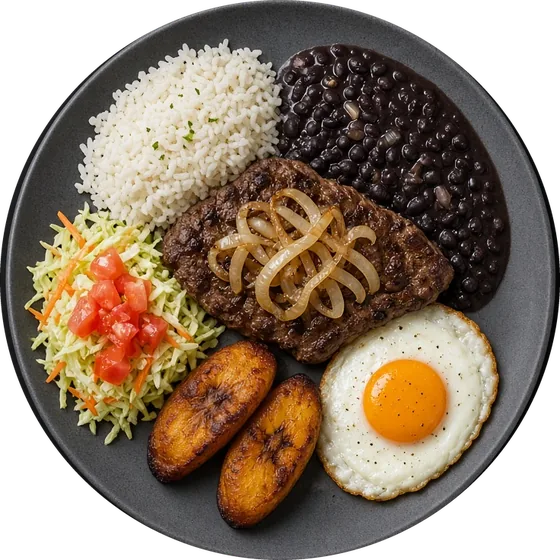
A casado is Costa Rica's typical lunch: one plate with rice, beans, a meat, salad, picadillo and fried ripe plantain, served the way people eat at home.[1][2]
What is in casado (Costa Rican plate)?
- Rice and beans, never missing
- Beef, chicken, pork or fish
- Picadillo of chayote, green beans, potato or cassava
- Cabbage and tomato salad, or pasta salad
- Fried ripe plantain
- Sometimes an egg, and a fresh fruit drink
Where does casado (Costa Rican plate) come from?
According to nutritionist Patricia Sedó, of the University of Costa Rica, in the early 20th century women who ran businesses in San José saw the chance to sell home cooking to workers in institutions and shops. That home cooking was popularly known as "casados": volume, variety, home seasoning and a good price.[2]
The dish as it is known today took shape in the 1960s, when more people worked in the capital and looked for home-style food.[1][4]
The name is disputed. Culinary anthropologist Marjorie Ross records two versions: that in a soda (diner) in downtown San José workers asked to be served "like a married man", with more food; or that restaurants offered full plates so workers felt at home. Another explanation, cited by Teletica, is that the ingredients are "married" (casados) to the rice.[1][3]
Types of casado (Costa Rican plate)
Some casados are more balanced, with chayote or green bean picadillo, fresh salad and grilled fish; others less so, with potato or cassava picadillo, pasta salad and breaded chicken.[1]
Some fast-food restaurants in San José sell it with fried breaded chicken, rice, beans, plantain and cabbage salad.[2]
When is casado (Costa Rican plate) eaten?
Mainly at lunch; the traditional breakfast is gallo pinto. It is ordered at sodas, the popular diners, which keep it on the menu alongside soups and gallos even though they now sell burgers and pizza.[1][2]
Did you know?
According to Sedó, the casado helped keep up bean consumption in Costa Rica, which had fallen, and the mix of rice and beans complements the proteins of both.[1]
It is a dish of many roots: rice came with the Spanish, beans are indigenous and African, fried plantain comes from Afro-Antillean cooking, picadillo from Andalusia and pasta from Italy.[3]
Frequently asked questions
What is a casado?
A casado is Costa Rica's typical lunch: one plate with rice, beans, a meat, salad, picadillo and fried ripe plantain, served the way people eat at home.
What are the ingredients of casado (Costa Rican plate)?
Rice and beans, never missing; Beef, chicken, pork or fish; Picadillo of chayote, green beans, potato or cassava; Cabbage and tomato salad, or pasta salad; Fried ripe plantain; Sometimes an egg, and a fresh fruit drink.
Where is casado (Costa Rican plate) from?
According to nutritionist Patricia Sedó, of the University of Costa Rica, in the early 20th century women who ran businesses in San José saw the chance to sell home cooking to workers in institutions and shops. That home cooking was popularly known as "casados": volume, variety, home seasoning and a good price.
When is casado (Costa Rican plate) eaten?
Mainly at lunch; the traditional breakfast is gallo pinto. It is ordered at sodas, the popular diners, which keep it on the menu alongside soups and gallos even though they now sell burgers and pizza.
Sources
- La Nación (Costa Rica): El casado: ¡Así crecimos en esta tierra!
- Universidad de Costa Rica, Escuela de Nutrición (Patricia Sedó): Reflexiones sobre la cocina del costarricense
- Teletica (Tía Zelmira): Los ticos comemos muy bien
- Teletica (Calle 7): ¿Cuánto saben los costarricenses sobre su propia gastronomía?
Researched and checked on November 25, 2026. Legends and disputed claims are marked as such in the text. How we work
Other dishes
What is a pupusa? · What is pernil? · What is rice and black beans? · What is arroz con gandules? · What are fried sweet plantains? · What are tostones? · What is mofongo? · What is ropa vieja? · What is black bean soup? · What is pozole? · all