What is cocido?
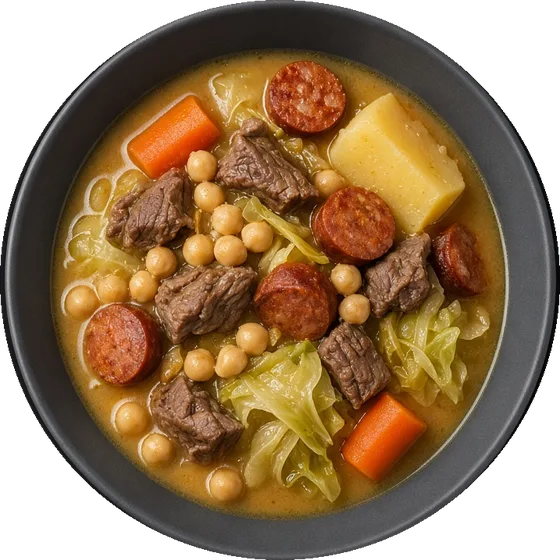
Cocido is a Spanish stew of chickpeas, meats, cured sausages and vegetables simmered together in water. The best known is cocido madrileño, served in "vuelcos" (turns): first the soup, then the chickpeas and vegetables, and finally the meats.[1][2]
What is in stew?
- Chickpeas: the one ingredient found in every recipe
- Beef shank, pork knuckle or ham end, pork fatback and sometimes chicken or hen
- Chorizo and morcilla (blood sausage)
- Potato, carrot, cabbage and leek
- Thin noodles for the soup
- The "relleno" or bola: a dumpling of bread, garlic, parsley and egg
Where does stew come from?
Its origin is uncertain. Most historians link it to olla podrida, a medieval stew of meats and legumes recorded since the 16th century, above all in the 17th, and frequent in Spanish Golden Age literature.[1][2][3]
According to Madrid's city tourism office, it also descends from adafina, a Jewish stew left to simmer in a clay pot from Friday night so it could be eaten on the Sabbath without cooking.[3]
In the 19th century the word "cocido" became common and the "madrileño" label appeared in inns and eating houses. It began as food for the poor and later reached the bourgeoisie and the royal court.[1][3]
Types of stew
The Madrid region has local cocidos: pradeño (Villa del Prado), with tomato and mint; corucho (Cenicientos), with golden thistle; olla del segador (Navalcarnero), with rice; and cocido de taba (Chinchón and Valdemoro), with river crayfish.[1]
It shares roots with other Spanish cocidos, such as cocido montañés from Cantabria and cocido maragato from León.[3]
Other names
In Madrid it is nicknamed "el coci", "los gabrieles", "los trompitos", "puchero" or "la olla". The expression "ganarse los garbanzos" (to earn one's chickpeas) means to work for a living.[1]
When is stew eaten?
Above all in winter. It used to be the worker's daily meal, the "bricklayer's cocido"; today it is a Sunday family meal and a celebration dish. Madrid has century-old restaurants that serve it daily, such as La Bola (1870) and Malacatín (1895), and a Cocido Route between February and March.[1][2][3]
Did you know?
The Madrid regional government declared it an Asset of Cultural Interest (intangible heritage) by Decree 8/2026, of February 4.[1]
It is said that Princess Isabel, "la Chata", had cocido from La Bola delivered to the Royal Palace to avoid mixing with the crowds: an early pioneer of takeaway food.[3]
Frequently asked questions
What is cocido?
Cocido is a Spanish stew of chickpeas, meats, cured sausages and vegetables simmered together in water. The best known is cocido madrileño, served in "vuelcos" (turns): first the soup, then the chickpeas and vegetables, and finally the meats.
What are the ingredients of stew?
Chickpeas: the one ingredient found in every recipe; Beef shank, pork knuckle or ham end, pork fatback and sometimes chicken or hen; Chorizo and morcilla (blood sausage); Potato, carrot, cabbage and leek; Thin noodles for the soup; The "relleno" or bola: a dumpling of bread, garlic, parsley and egg.
Where is stew from?
Its origin is uncertain. Most historians link it to olla podrida, a medieval stew of meats and legumes recorded since the 16th century, above all in the 17th, and frequent in Spanish Golden Age literature.
When is stew eaten?
Above all in winter. It used to be the worker's daily meal, the "bricklayer's cocido"; today it is a Sunday family meal and a celebration dish. Madrid has century-old restaurants that serve it daily, such as La Bola (1870) and Malacatín (1895), and a Cocido Route between February and March.
Sources
- Comunidad de Madrid: El cocido madrileño: Patrimonio inmaterial
- The Objective: La verdadera receta del cocido madrileño
- esMADRID (Ayuntamiento de Madrid): Tradition on the table
Researched and checked on November 25, 2026. Legends and disputed claims are marked as such in the text. How we work
Other dishes
What is an empanada? · What is pizza? · What is a salad? · What is a Spanish-style fried egg? · What is gravy? · What is bacalao a la vizcaína? · What is eggnog? · What is turrón? · What is fruitcake? · What is arroz con leche? · all